Free Islamic Studies Online
Free to begin and entirely self-paced. The Quran’s stories, the Seerah, and 1,400 years of Islamic history, one five-minute class a day.
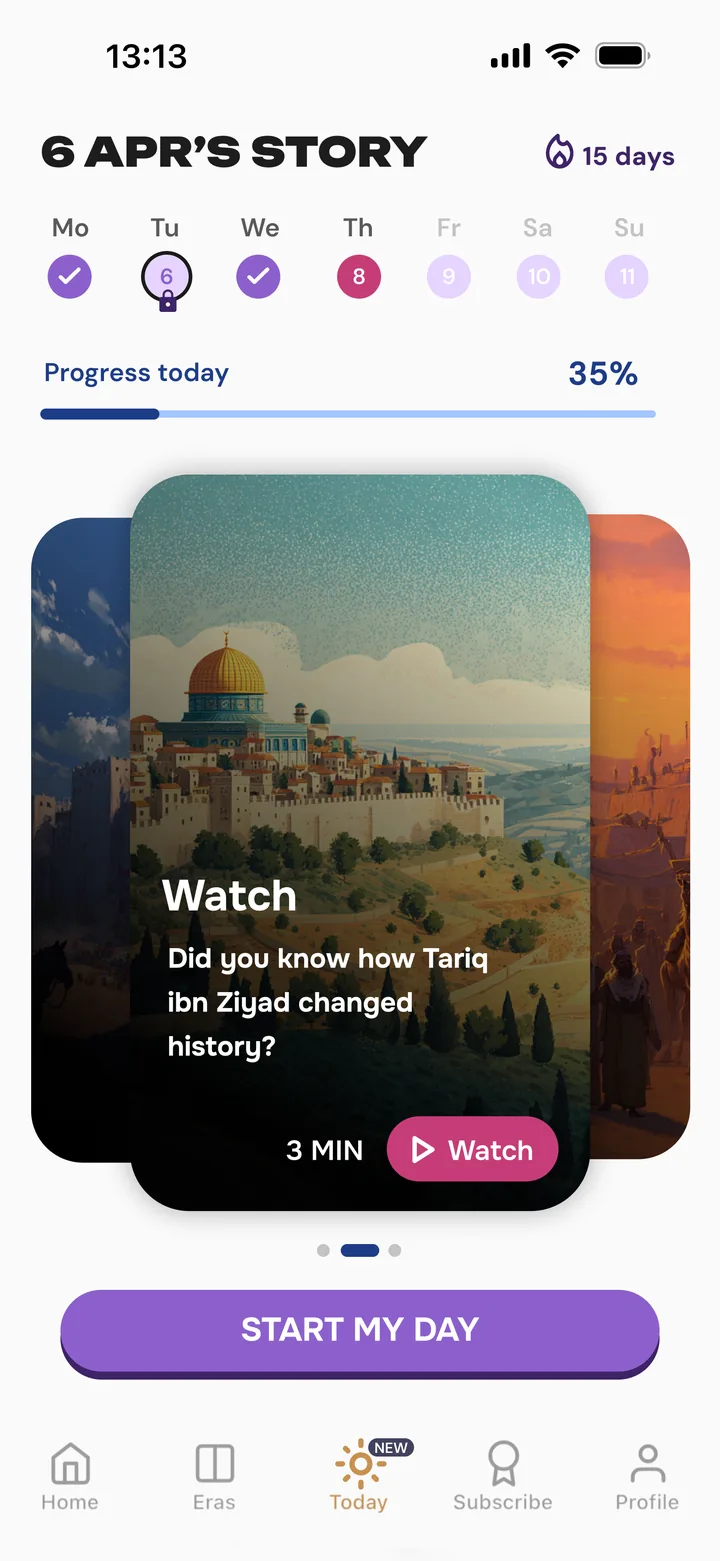
Or get the app


Study Islamic history without the cost or the commitment
Most structured Islamic courses ask for tuition, a fixed timetable, or a long enrolment before you learn anything. Archives works the other way round: free to begin, self-paced, and short enough to fit a real week. You read one true story, answer a single question, and you have made progress. On a commute, a coffee break, or the few minutes before bed.
Cinematic, but true
History that reads like a short film and stays with the sourced account. No myth dressed up as history.
Learn by doing
One quick question after every story turns reading into recall, which is what makes knowledge last.
A clear path
You start at the beginning and move forward in order, so the pieces connect instead of piling up as trivia.
A free learning path through 1,400 years
Each era unlocks a new set of stories. Begin at the start and build the full picture.

The world the Quran entered
Mecca, the Kaaba, and the society into which the Prophet ﷺ was born.
The Rise of Islam
The first revelation, the early community, and the Hijra to Medina.
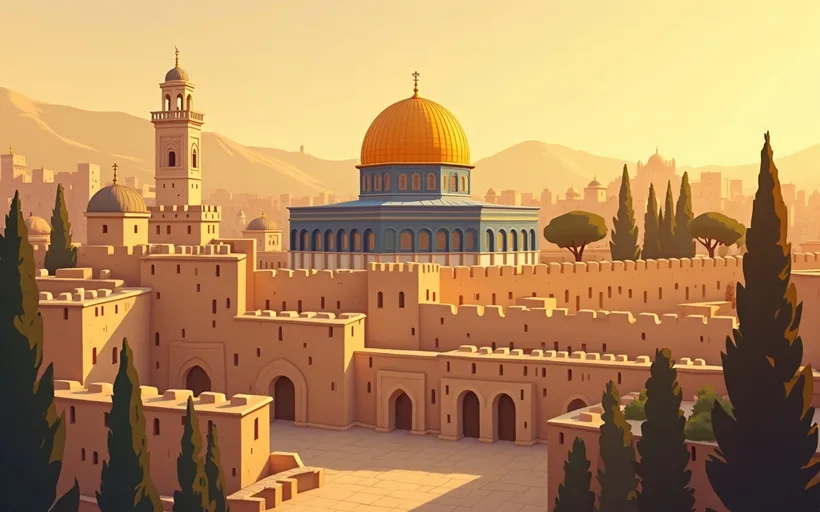
The Rashidun
The rightly-guided caliphs, the early expansion, and the opening of Jerusalem.
The Umayyads
Damascus, the first great dynasty, and Islam reaching three continents.
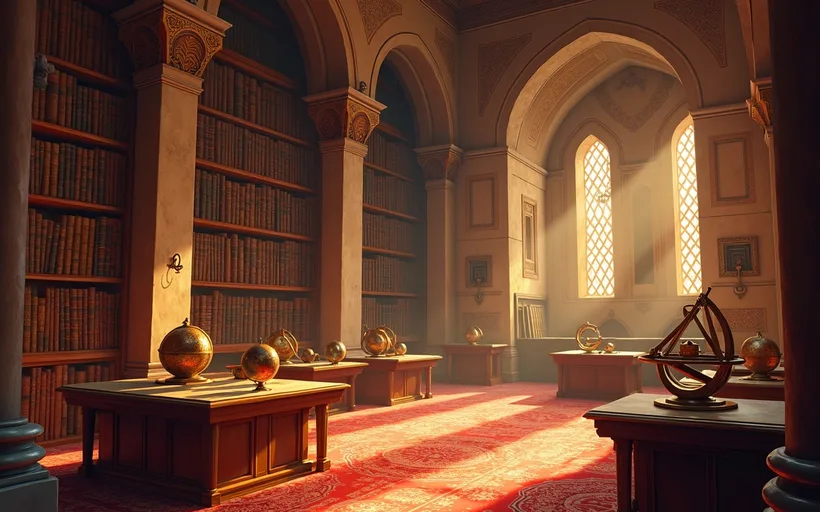
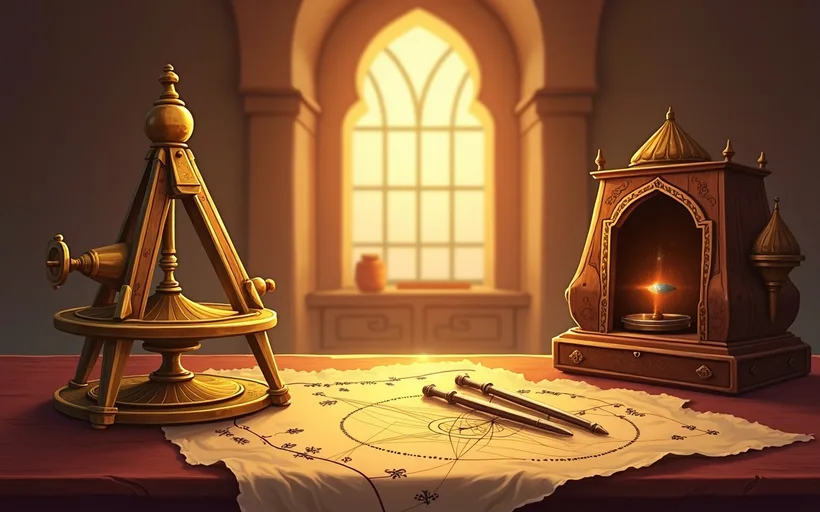

Fatimids & Mamluks
Egypt, the warrior-slaves, and the figures who defended the Muslim world.

The Ottomans
Istanbul, six centuries of empire, and the world it left behind.
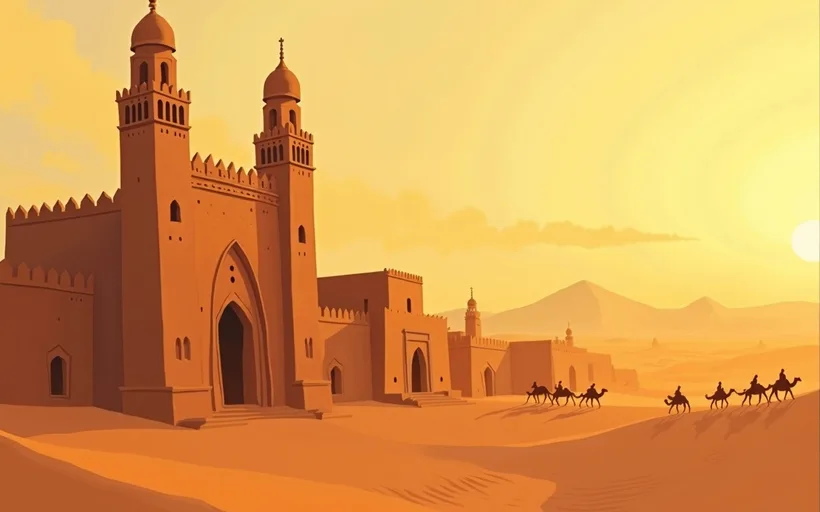
West Africa & the Mughals
Timbuktu, Mali, and the Islamic worlds that school atlases leave out.
How self-paced study works
Open Archives free
On the web or the app. Setting up a free account takes about a minute and no card is needed.
Read one story a day
Around five minutes, in plain language, starting from the very beginning.
Answer one question
A quick check that locks the lesson into memory and shows your progress.
Keep a streak going
Small daily wins turn a passing interest into steady, lasting knowledge.
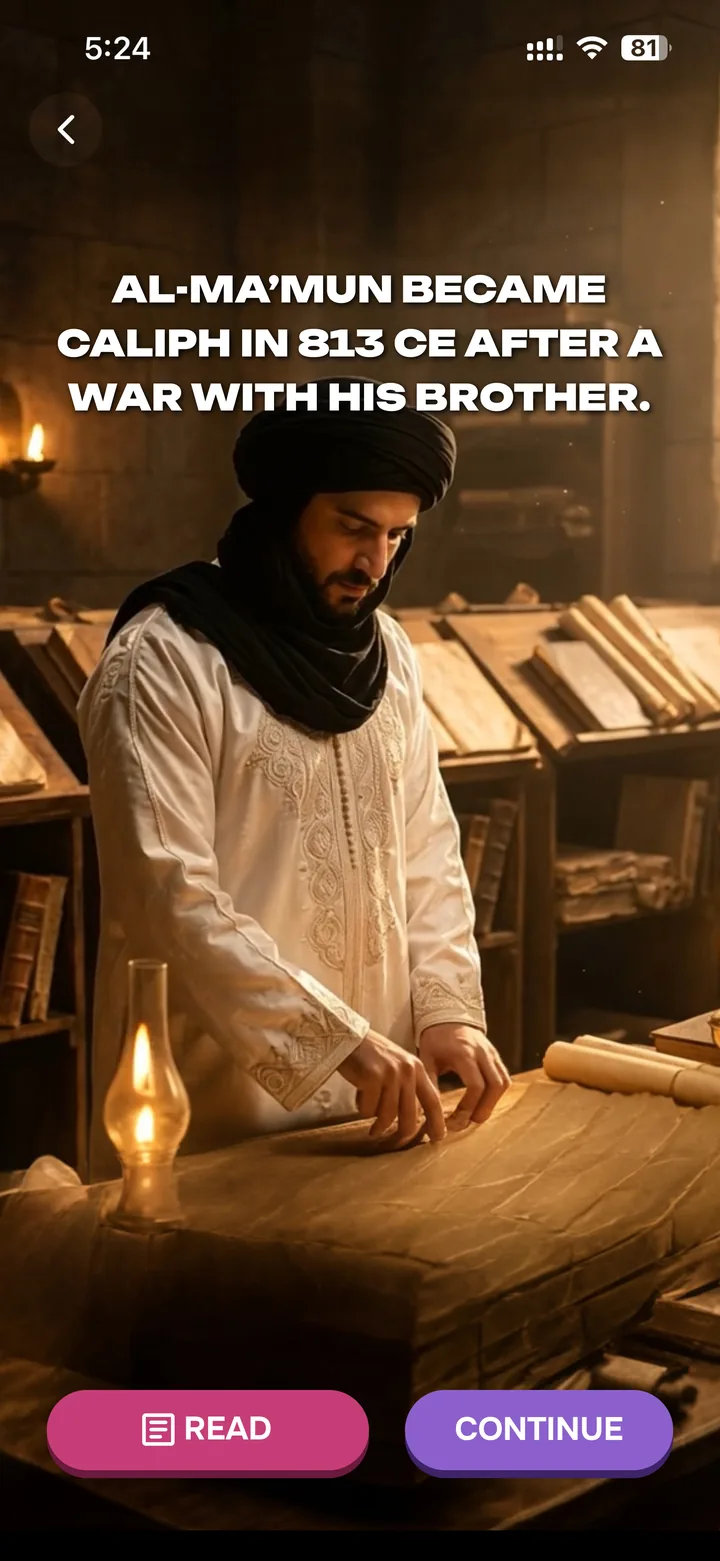
One storyIllustrated, five minutes, sourced from historical accounts.
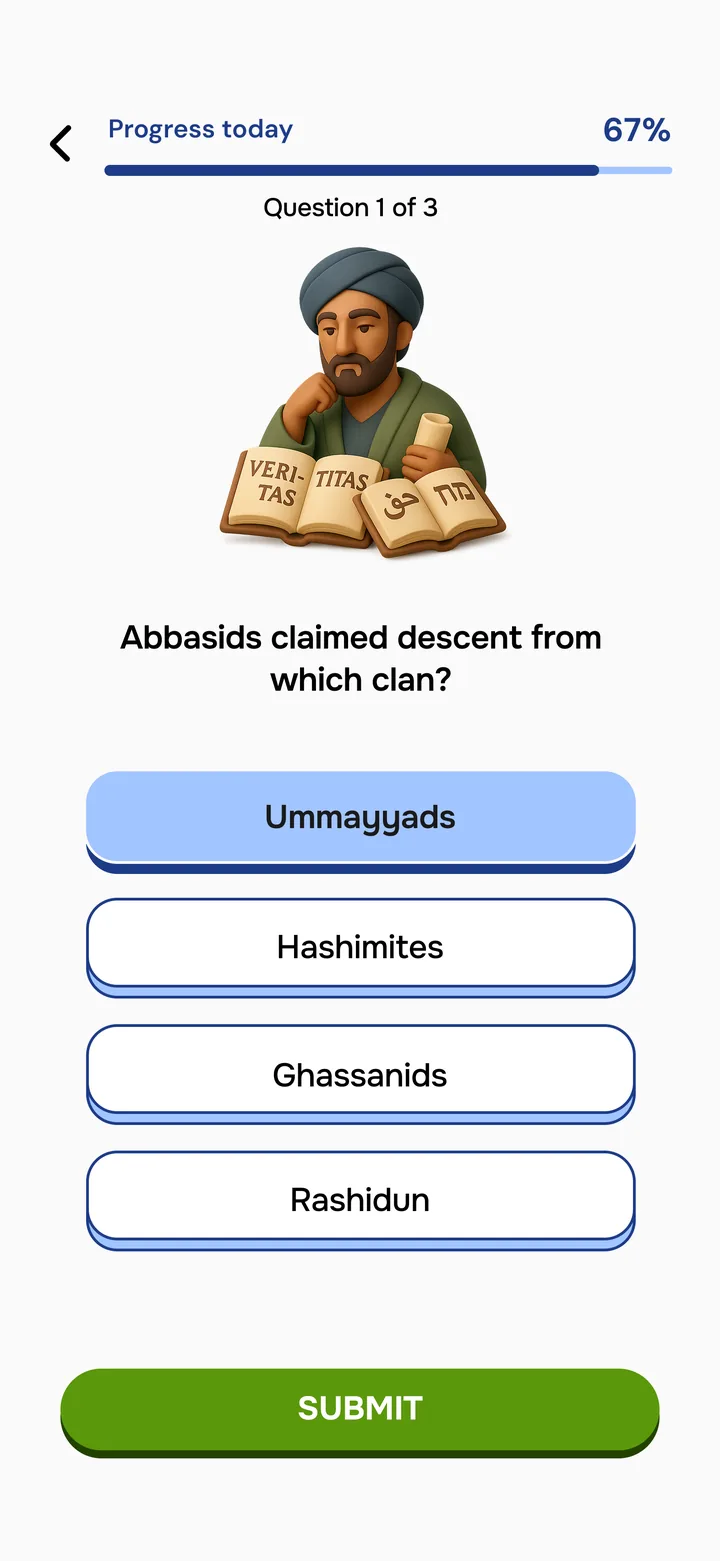
One questionThe step that turns reading into recall.
Visible progressXP and streaks that make tomorrow easy.
Prefer to test yourself first? Try the free Islamic Quiz Challenge.
What you actually get out of it
Not a certificate and not a reading list you’ll abandon by week two. Something closer to finally having the map.
The shape of the whole story
Most people know fragments: a prophet here, a battle there, Cordoba somewhere. Going in order turns those fragments into one connected story you can hold in your head.
Things you can actually tell someone
Who founded the world’s first university, what the House of Wisdom was really doing, how a library in Baghdad shaped the science you learned at school. Knowledge that travels.
It sticks, because you answer
Reading alone fades within days. One question after each story is the difference between having read about the Rashidun and knowing who they were a month later.
A place to start when you had none
No prerequisites, no Arabic, no 400-page tome. You begin at the beginning on day one and you’re never behind.
You can start learning for free. A subscription unlocks the full library and extra learning tools when you’re ready for more.
What these classes cover, and what they don’t
Plenty of free Islamic courses online teach fiqh, aqeedah, hadith sciences, tajweed or Arabic grammar, and many issue a certificate at the end. Archives does none of those things. This is Islamic history: the Prophets, the Seerah, the caliphates, the Golden Age, Al-Andalus, West Africa and the Ottomans. What happened, and why it mattered. There is no certificate and no exam.
That trade is deliberate. Most people were never taught this history, and it is what makes the rest of it make sense. If you need Arabic, fiqh or a credential, study those with a qualified teacher and use Archives for the context around them.
Who it’s for
Curious beginners
Anyone who wants to finally learn the history they were never taught, without wading through a 400-page book.
New & returning Muslims
A gentle, structured starting point that begins at the beginning and assumes no prior knowledge.
Lifelong learners
Readers who want depth over time and a daily habit that keeps the knowledge growing.
Who makes these lessons
Free is only worth anything if what you’re learning is true, so here is who writes it.
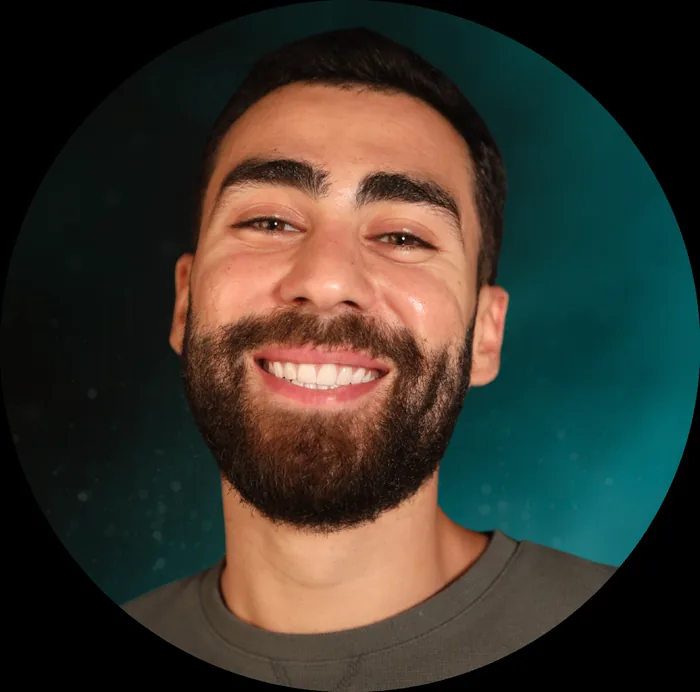
“My community is full of people who care deeply about understanding their history but never knew where to start. Most resources were built for academics, not for them. Archives puts real Islamic history in everyone’s hands, without the complexity.”
Frequently asked questions
Can I really start studying for free?
Yes. You can start learning at no cost, and no card is needed. A subscription unlocks the full library and extra learning tools when you’re ready for more.
Do I need to create an account?
Yes, and it takes about a minute. The account is what keeps your streak, your XP and your place in the story safe across your phone and the web, so you can pick up exactly where you stopped.
Where do I begin if I know nothing?
At the beginning, which is the point. Archives opens with the earliest stories and moves forward era by era, so you’re never dropped into the middle of something that assumes you already know the context.
Is there a certificate at the end?
No. Archives isn’t an accredited course and doesn’t issue certificates or diplomas, so if you need a credential, look at an accredited institution. What you get here is the history, and enough recall to still have it a month later.
Do these courses cover fiqh, Arabic or tajweed?
No. Archives teaches Islamic history: the Prophets, the Seerah, the caliphates, the Golden Age, Al-Andalus, West Africa and the Ottomans. For fiqh, aqeedah, Quran recitation or Arabic grammar you want a qualified teacher or a dedicated institute. Archives is the context that sits around that study.
Is the content accurate and sourced?
Yes. Every story is built from historical accounts rather than myth, and where scholars disagree the story says so instead of picking the most dramatic version.
Can I study Islamic history on my phone?
Yes. Archives works in your browser and as an app on iOS and Android, so you can learn anywhere in about five minutes a day.
Do I need any background knowledge?
None at all. Archives starts at the very beginning and builds forward one step at a time, so beginners and returning learners both start comfortably.
Explore more
Your first story is waiting
Two minutes to find your starting point, and you begin at day one whatever you already know.
Start freeOr get the app
Loved by 70,000+ learners across 50 countries · rated 4.9★