The Islamic Golden Age: How Islam Lit Up the Medieval World
For roughly five centuries, the Muslim world was the beating heart of global science and learning. This is the story of the Islamic Golden Age: how, from Baghdad to Cordoba, scholars turned the caliphates into the most advanced civilisation on earth, and then handed that knowledge to Europe.
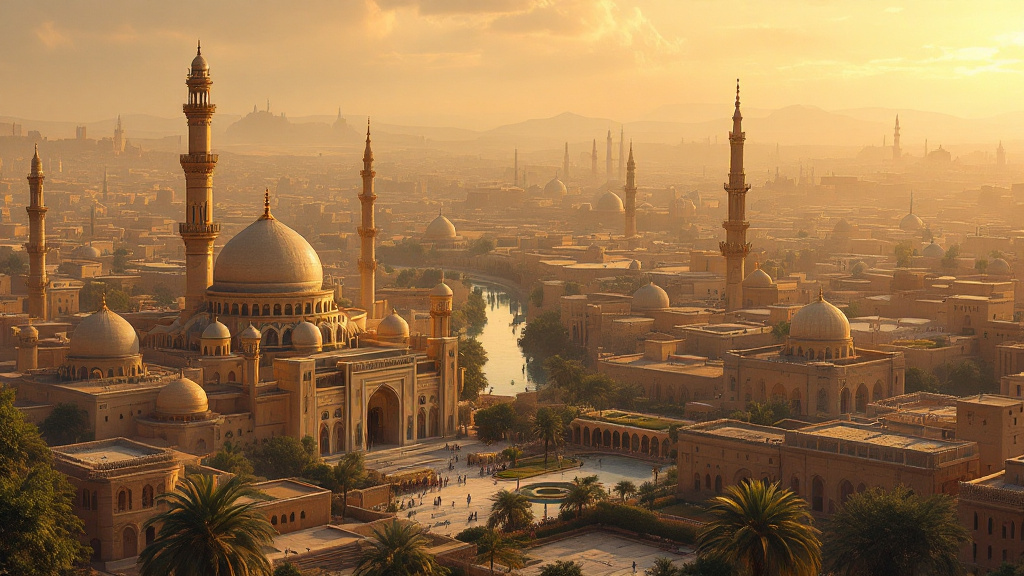
What was the Islamic Golden Age?
The Islamic Golden Age was a period of about five centuries, traditionally dated from around 786 to 1258, when the Muslim world led the globe in science, medicine, mathematics, philosophy and the arts. It began under the Abbasid caliphs in Baghdad and spread across the whole Islamic world, from Cordoba in the west to Samarkand in the east.
What made it golden was not one discovery but a habit of mind. Scholars gathered the learning of the Greeks, Persians, Indians and others, translated it into Arabic, corrected it, argued with it, and pushed it further. A civilisation that valued books built libraries when most of Europe counted its manuscripts in the dozens. Muslim, Christian and Jewish scholars often worked side by side.
Historians disagree on the exact dates. Most start the age with the reign of Harun al-Rashid and end it with the Mongol destruction of Baghdad in 1258, though some extend it to about 1350 to include later flowering under the Timurids, or to 1492 and the fall of Muslim Granada. What no one disputes is the result: much of the science that Europe would later build on was preserved, and often invented, in this world.
How it began: Baghdad and the Abbasids
In 750 the Abbasid family overthrew the Umayyads and, twelve years later, founded a new capital on the Tigris: Baghdad, laid out by the caliph al-Mansur as a perfect round city. Within a few generations it was one of the largest cities on earth and the richest court of its day.
Two things turned that wealth into learning. The first was paper. Muslims learned papermaking from Chinese captives after the Battle of Talas in 751, and cheap paper made books, and therefore knowledge, spread faster than parchment ever had. The second was a culture that treated the pursuit of knowledge as a duty. Caliphs paid for translations and sponsored scholars, and a book trade grew up around the mosques.
The House of Wisdom
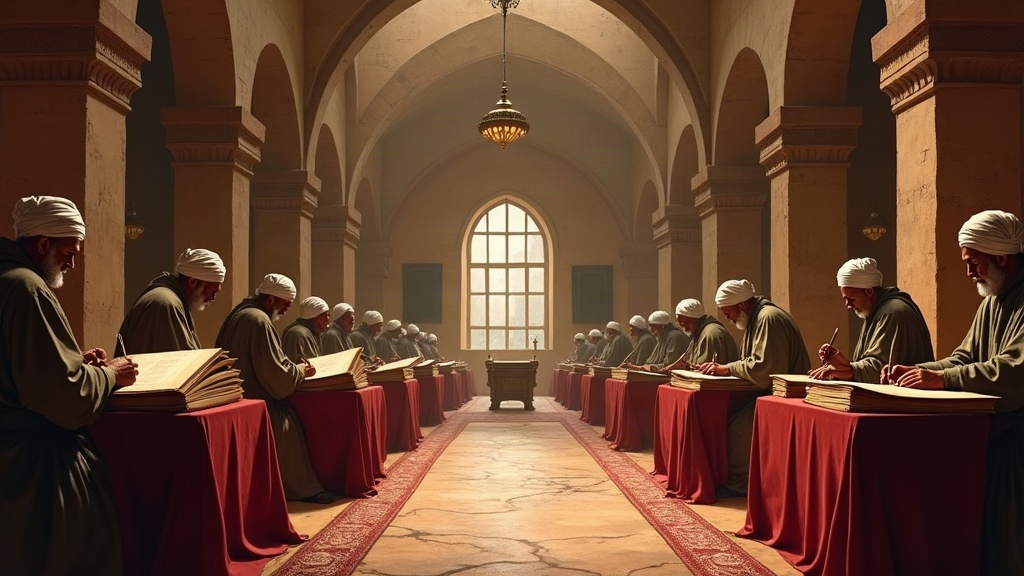
At the centre of it all was the House of Wisdom (Bayt al-Hikmah), a library and academy in Baghdad that reached its peak under the caliph al-Ma'mun, who ruled from 813 to 833. He is said to have paid translators the weight of each finished book in gold, and he sent for manuscripts from as far as Constantinople.
The result was the great translation movement. Works by Aristotle, Euclid, Ptolemy, Galen and the Indian mathematicians were rendered into Arabic, studied and improved. Knowledge that might otherwise have been lost was saved here, and then carried forward. This is where a scholar named al-Khwarizmi worked out the rules of algebra, and where the numeral system we still use, complete with zero, was refined and spread.
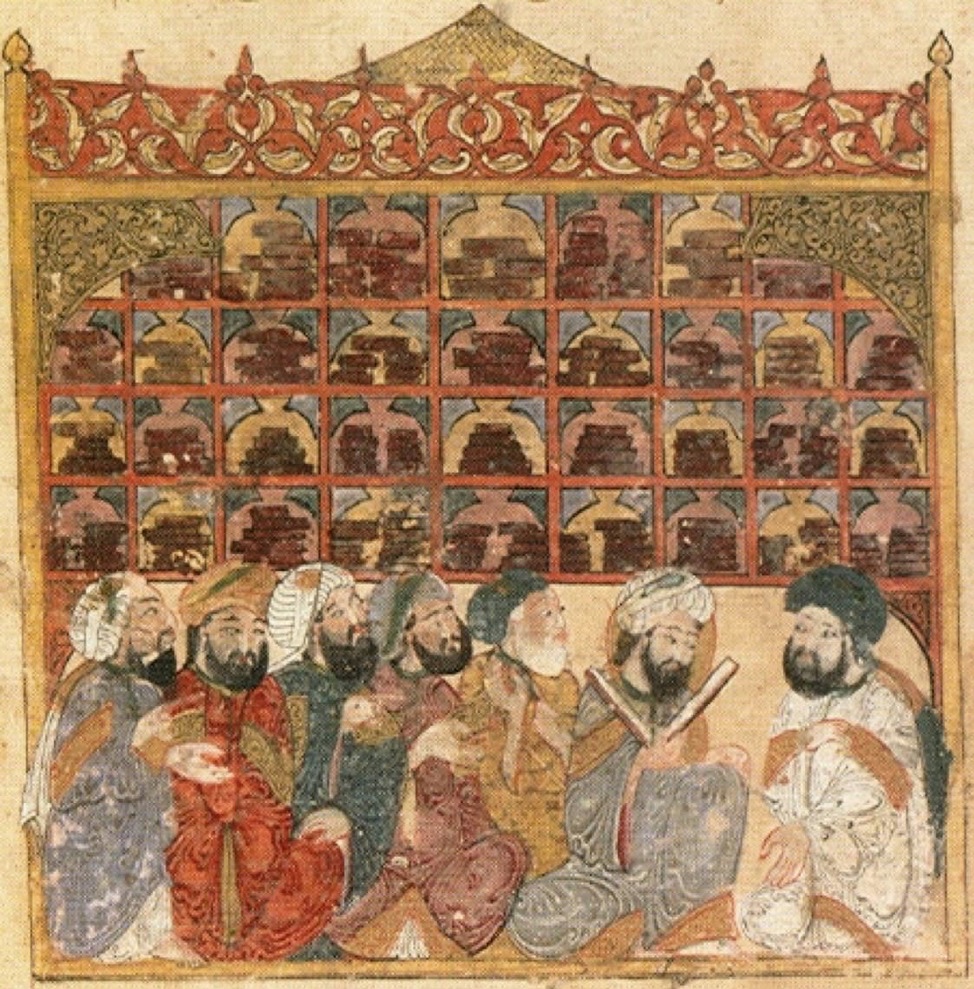
What the Golden Age achieved
A short tour of the breakthroughs. Each field below could fill a book, and several fill their own page on this site.
Mathematics
Al-Khwarizmi founded algebra and gave us the word “algorithm.” The Hindu-Arabic numerals and zero spread from here to the world.
Optics & method
Ibn al-Haytham explained how vision works and insisted on testing ideas by experiment, an early form of the scientific method.
Medicine
Ibn Sina’s Canon of Medicine was a standard European textbook for 500 years. Al-Zahrawi’s work founded much of modern surgery.
Astronomy
Observatories mapped the sky, star names like Aldebaran and Altair entered our language, and al-Sufi recorded the Andromeda galaxy in 964.
Chemistry
Jabir ibn Hayyan built the tools and methods of the laboratory. The words alcohol, alkali and alchemy are all Arabic.
Learning
The world’s oldest still-running university, al-Qarawiyyin in Fez, was founded by Fatima al-Fihri in 859.
Want the detail? Read the full story of Islamic science and its discoveries, look up at Islamic astronomy, meet the people who made it all, or see how the same golden age unfolded at the other end of the Mediterranean in Al-Andalus, Muslim Spain.
Why did the Golden Age end?
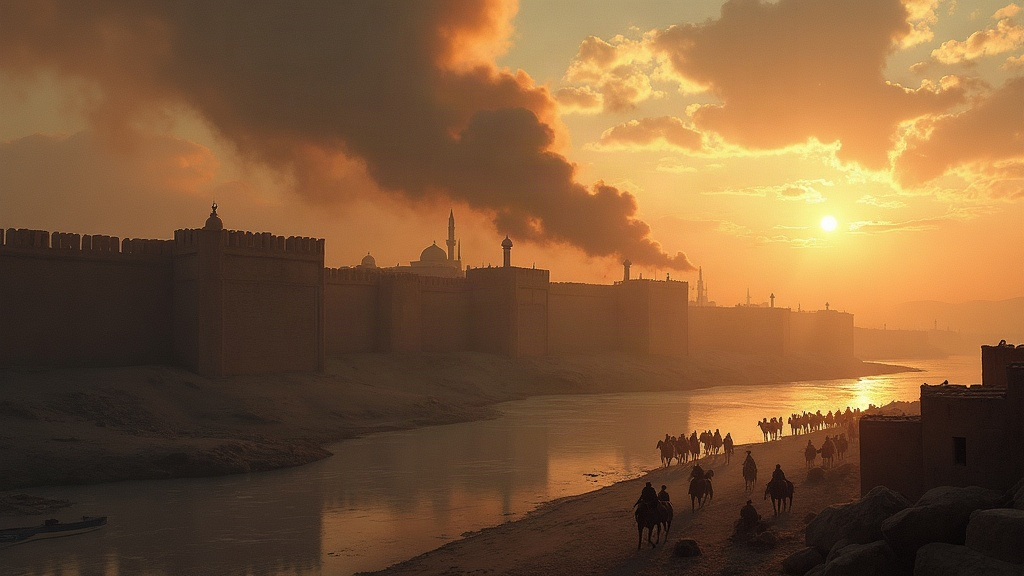
There was no single ending. The caliphate had been fragmenting for centuries, splitting into rival dynasties long before the end. But the symbolic close came in 1258, when a Mongol army under Hulagu Khan besieged Baghdad, killed the last Abbasid caliph, and destroyed the House of Wisdom. Accounts from the time say so many books were thrown into the Tigris that the river ran black with ink.
Learning did not stop. It continued in Cairo, in Muslim Spain, and later in the great observatories of Maragha and Samarkand. But the Baghdad-centred age, the one that had drawn scholars from three continents to a single city, was over.
The legacy: how it reached us
The knowledge did not die with Baghdad. From the 12th century, scholars in Toledo and Sicily translated Arabic works into Latin, and that stream of learning helped spark the European Renaissance. Ibn al-Haytham shaped how Europeans thought about light and proof. Ibn Sina trained their doctors. Al-Khwarizmi taught them to calculate.
You can hear the debt in everyday English. Algebra, algorithm, alcohol, alkali, cipher and zenith are all Arabic in origin. The numerals on this page came the same way. The Golden Age was not a curiosity at the edge of history. It is one of the foundations the modern world stands on.
Learn Islamic history with Archives
Archives turns 1,400 years of Islamic history into one short, true story a day. Sourced, built to stick, and made for people who want to understand their history without wading through textbooks. Think Duolingo, but for the story of your civilisation.


Who writes these guides
History is only worth reading if it’s true, so here is who writes it.

“Most people have heard the phrase ‘Islamic Golden Age’ and never been shown what actually happened in it. I want to give it back, accurately and in plain language, so anyone can see where so much of our modern world began.”
Islamic Golden Age: frequently asked questions
What was the Islamic Golden Age?
A period of roughly five centuries, traditionally dated from about 786 to 1258, when the Muslim world led the globe in science, medicine, mathematics, philosophy and the arts. Centred first on Baghdad under the Abbasid caliphs, it drew on Greek, Persian and Indian traditions and carried them far beyond what came before.
When was the Islamic Golden Age?
It is usually said to begin around 786 with the reign of Harun al-Rashid and the rise of Baghdad’s House of Wisdom, and to end in 1258 with the Mongol sack of Baghdad. Some historians extend it to about 1350, or even to 1492 and the fall of Muslim Granada.
Where did it take place?
Its heart was Baghdad, but the flourishing spread across the Muslim world, including Cordoba in Al-Andalus, Cairo, Damascus, Bukhara and Samarkand.
Why did the Islamic Golden Age end?
There was no single cause. Political fragmentation and invasions weakened the caliphate over time, and the symbolic end is the Mongol siege of Baghdad in 1258, when the city and its House of Wisdom were destroyed. Learning continued elsewhere for centuries afterward.
What did it give the modern world?
Algebra and algorithms, the numeral system with zero, the experimental study of optics, Ibn Sina’s Canon of Medicine, advances in astronomy and chemistry, and the preservation of classical knowledge that helped spark the European Renaissance. Read the detail in Islamic science.
Keep exploring
More of the story, on the web and in the app.