Islam vs Muslim: What Is the Difference?
Islam is the religion. A Muslim is a person who follows it. Both words grow from the same Arabic root, s-l-m, which carries the meaning of submitting to Allah and of peace.
| Islam | Muslim | |
|---|---|---|
| What it is | The religion | A person who follows it |
| Meaning | Submission to God | One who submits to God |
| Type of word | Noun (a name) | Noun or adjective |
| Use it like this | “Islam teaches charity.” | “She is a Muslim.” |
| Describing word | Islamic (art, law) | Muslim (family, scholar) |
One Arabic root, three words
Arabic builds families of words from three-letter roots. The root s-l-m gives us all three of these.
Islam
Submission: giving yourself to the will of the One God.
Muslim
One who submits. Its form, with mu- at the start, is the Arabic pattern for the one doing the action.
Salam
Peace, as in as-salamu alaykum, “peace be upon you.”
The name comes from the Qur'an itself: “It is He who has named you Muslims, both before and in this” (22:78). Most commentators, Ibn Kathir among them, read “He” here as Allah.
Islam, Muslim or Islamic: which one?
Three words cover almost every case. Here is when to use each.
| Word | Use it for | Example |
|---|---|---|
| Islam | The name of the religion | “Islam teaches kindness to parents.” |
| Muslim | A person, or people | “He became a Muslim last year.” |
| Muslim | Describing people and communities | “a Muslim family”, “Muslim scholars” |
| Islamic | Describing things tied to the faith or its civilisation | “Islamic art”, “the Islamic calendar” |
A simple test: if you are talking about people, use Muslim. If you are talking about ideas, law, art or history, Islamic usually fits. Some phrases take either, so you will see both “the Muslim world” and “the Islamic world.”
Saying it right
These come up often. The fix is usually one word.
Islam is the religion, so a person is Muslim.
People follow the religion, which is Islam.
An older English spelling, now outdated. Muslim is the standard spelling today: it is the one Muslims use, and it is closer to the Arabic.
An old European term. Muslims reject it because they worship God alone, not the Prophet Muhammad ﷺ.
Who is a Muslim?
A Muslim is anyone who believes in the One God and that Muhammad ﷺ is His final messenger. A person becomes Muslim by sincerely declaring this in the shahada: la ilaha illa Allah, Muhammadun rasul Allah, “There is no god but God, and Muhammad is the messenger of God.”
Muslims ask Allah to bless the prophets whenever their names are mentioned. The ﷺ after the Prophet Muhammad's name stands for “may Allah bless him and grant him peace,” and the (AS) after earlier prophets for “peace be upon him.”
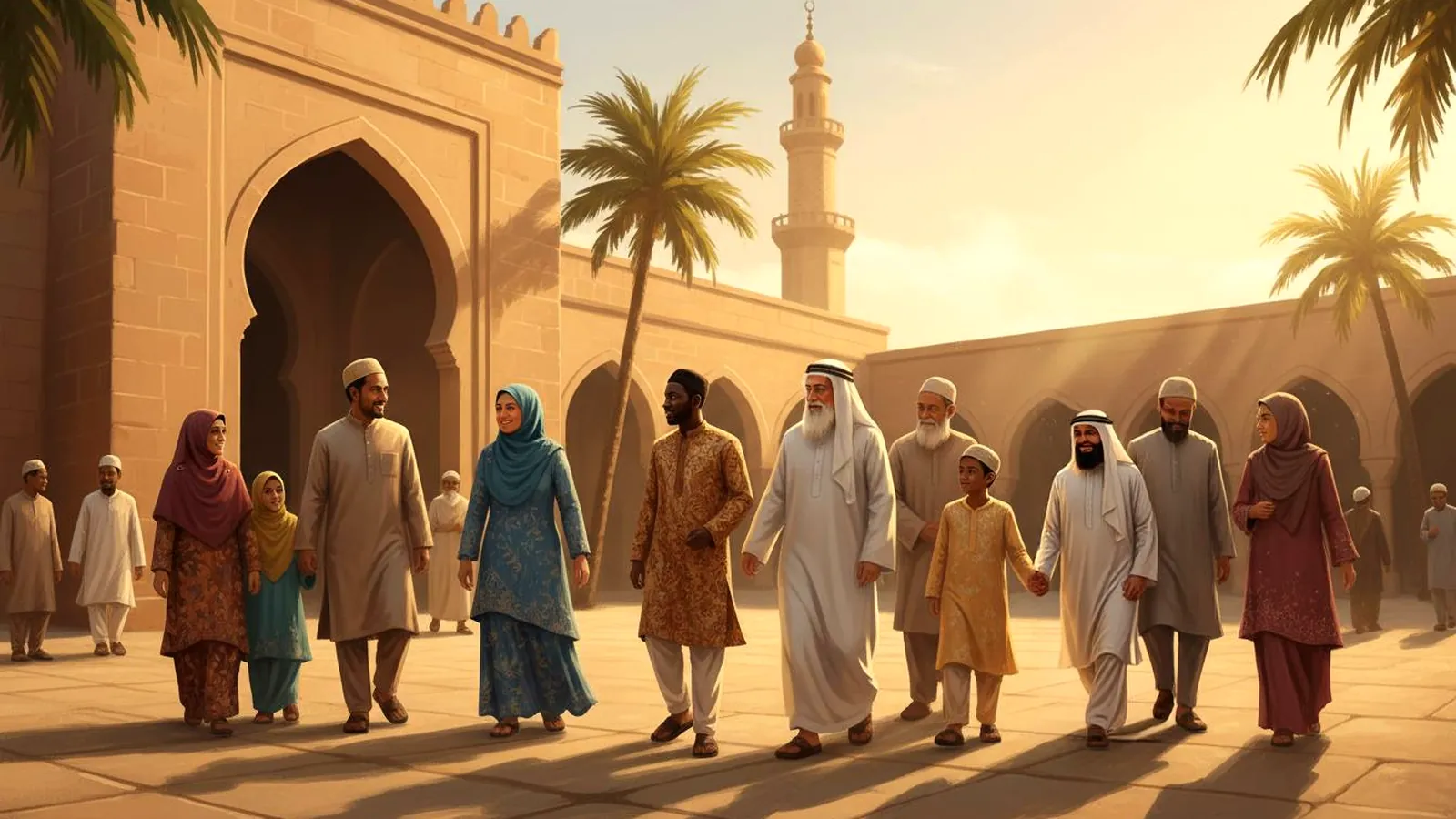
Being Muslim has nothing to do with race, nationality or the language you speak. Muslims are Indonesian and Nigerian, Bosnian and Brazilian, born into the faith or new to it.
In the Qur'an, the word reaches back before the Prophet ﷺ. Ibrahim (AS) and his son Isma'il (AS) pray, “Our Lord, make us Muslims [in submission] to You” (2:128). The Arabic word there is muslimayn: two who submit.
Islam is the teaching, found in the Qur'an and the Sunnah. Muslims are the people who follow it. When scholars ask what Islam says, they go to those sources, not to what any one Muslim does.
Muslim vs Arab: not the same thing
Arab describes a people, whose language is Arabic. Muslim describes a faith. Most Arabs are Muslim, but most Muslims are not Arab.
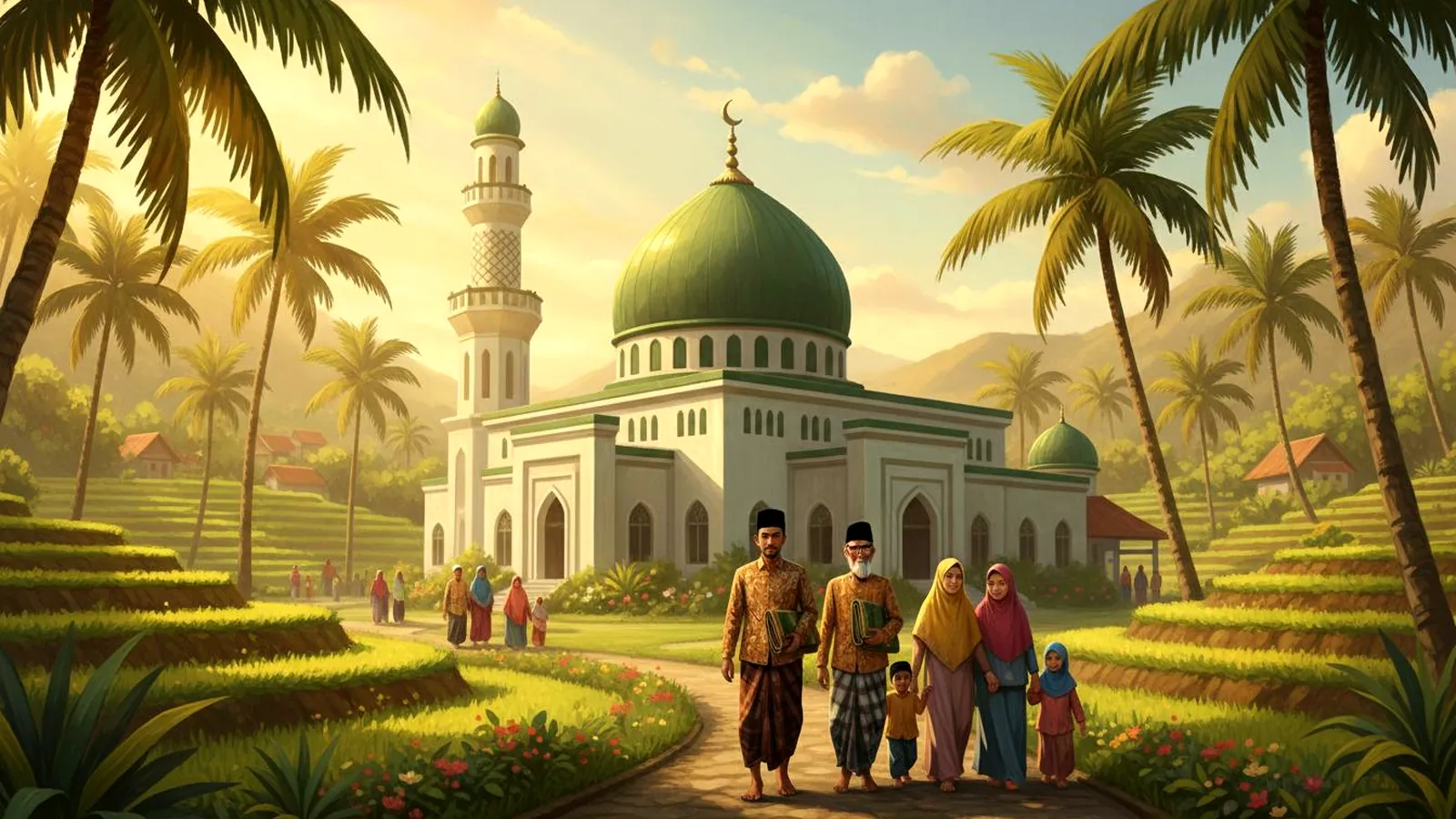
Indonesia and Pakistan have the largest Muslim populations, and India and Bangladesh each have well over 100 million.
Muslimah, plurals and how to say it
Islam is the name of the faith, and Muslim is the name for the people who follow it. A few more details complete the picture.
Muslimah
The Arabic feminine form. In English, Muslim covers everyone, though many women also call themselves Muslimah.
Muslims
The English plural. In Arabic it is muslimun or muslimin.
MUS-lim
With a crisp “s,” and Islam as “is-LAAM.”
Curious about the faith itself? Start with our 25 facts about Islam.
Learn Islamic history with Archives
Archives tells the story of Islam and the people who carried it, from the first revelation in Mecca to the scholars of Baghdad and Cordoba, as one short, illustrated story a day.
- Five minutes a day: one story and one quick question, and you have learned something that stays with you.
- Told in order: you start at the beginning, so each era makes sense of the next.
- Carefully researched and sourced: each story stays with the historical account.
- Free to start: on the web or in the app, with no card needed.


Who writes these guides
Written by Basel Gazi for Archives.
“My community is full of people who care deeply about understanding their history but never knew where to start. Most resources were built for academics, not for them. Archives puts real Islamic history in everyone’s hands, without the complexity.”
Islam vs Muslim: frequently asked questions
What is the difference between Islam and Muslim?
Islam is the religion. A Muslim is a person who follows it. Both words come from the Arabic root s-l-m: Islam means submission to God, and a Muslim is one who submits.
Can you be Islam but not Muslim?
No, because a person cannot be Islam: Islam is the name of the religion. A person who follows it is a Muslim.
Is Islamic the same as Muslim?
Not quite. Muslim usually describes people (“a Muslim family”), and Islamic describes things tied to the faith or its civilisation (“Islamic art”, “Islamic law”). Some phrases take either, like “the Muslim world” and “the Islamic world.”
Is Muslim a race or a nationality?
Neither. Muslim describes a faith. Muslims come from every ethnicity and country, and anyone can become Muslim.
Are all Muslims Arab?
No. Most Arabs are Muslim, but most Muslims are not Arab. Indonesia and Pakistan have the largest Muslim populations, and India and Bangladesh each have well over 100 million.
Is it Moslem or Muslim?
Muslim. “Moslem” is an older, outdated spelling. Muslim is the standard today: it is the spelling Muslims use, and it is closer to the Arabic.
What do you call a female Muslim?
In English, a Muslim, though many women also call themselves Muslimah, the Arabic feminine form.
How does someone become Muslim?
By sincerely declaring the shahada: la ilaha illa Allah, Muhammadun rasul Allah, “There is no god but God, and Muhammad is the messenger of God.”
Keep exploring
More of the story, on the web and in the app.