Islam and the Stars: Astronomy in the Muslim World
Look up on a clear night and many of the stars you can name were named by Muslim astronomers. For centuries, astronomy was the queen of the Islamic sciences, driven by faith, sharpened by mathematics, and written across a sky we still read in Arabic.
Why the stars mattered
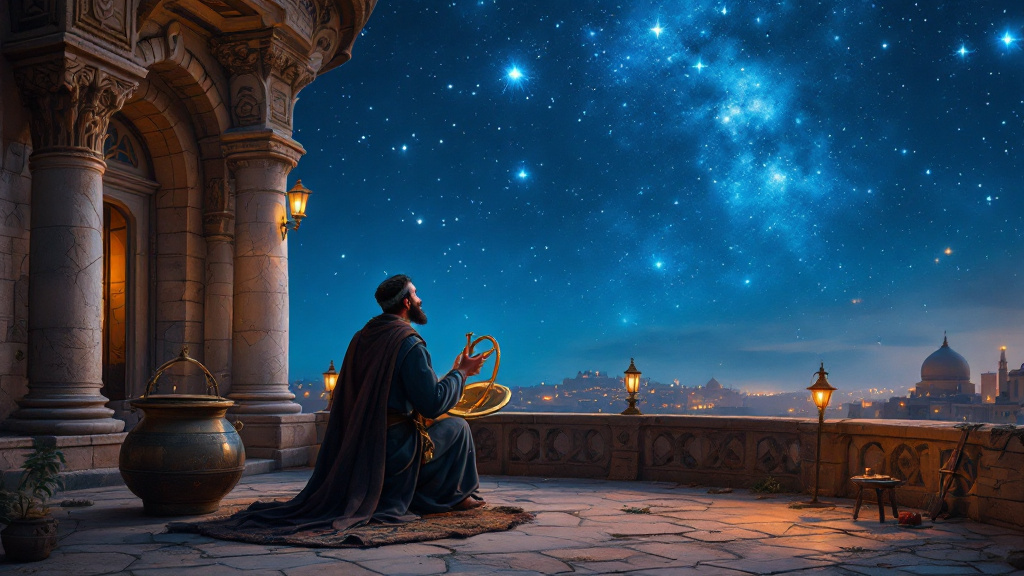
Astronomy in the Muslim world was never only about curiosity. It answered questions the faith asked every single day.
To pray, a Muslim needs the qibla, the direction of Mecca, from wherever they stand on earth. The five daily prayers are timed by the position of the sun. The month of Ramadan, and the festivals, begin and end with the sighting of a thin new crescent moon, which is why the dates of the Islamic holidays move through the seasons instead of sitting still. Getting these right, anywhere from Spain to India, meant measuring the heavens with real precision. So mosques employed astronomers, and the practical need for accuracy pushed the science forward for centuries. It grew fastest during the Islamic Golden Age, alongside the other Islamic sciences.
Where they watched the sky
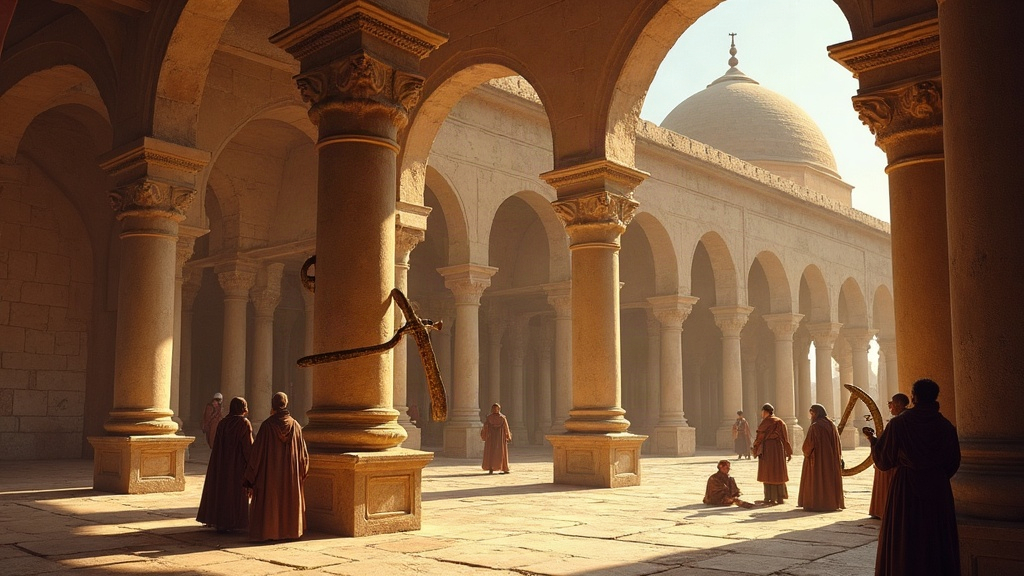
In the 9th century, the caliph al-Ma'mun built observatories in Baghdad and Damascus, and had his astronomers measure the size of the earth with remarkable accuracy. Later came two of the most important observatories in history. The Maragha observatory in Iran, founded in 1259 and led by Nasir al-Din al-Tusi, gathered a team that rebuilt planetary theory and produced a mathematical device, the “Tusi couple,” that later turned up in the work of Copernicus.
Two centuries on, a prince did the observing himself. Ulugh Beg, grandson of the conqueror Timur, built a huge observatory at Samarkand in the 1420s and compiled a star catalogue so accurate it was still being used in Europe centuries later.
The astrolabe: a pocket sky
The signature instrument of Islamic astronomy was the astrolabe, a flat brass model of the heavens that could fit in the hand. With one, an astronomer could tell the time from the stars, find the direction of Mecca, work out prayer times, and measure the height of anything from a mountain to a star. Muslim craftsmen turned it into a precise and beautiful tool, and it spread from the Islamic world into medieval Europe, where it remained the astronomer's essential companion for hundreds of years.
The stars still speak Arabic
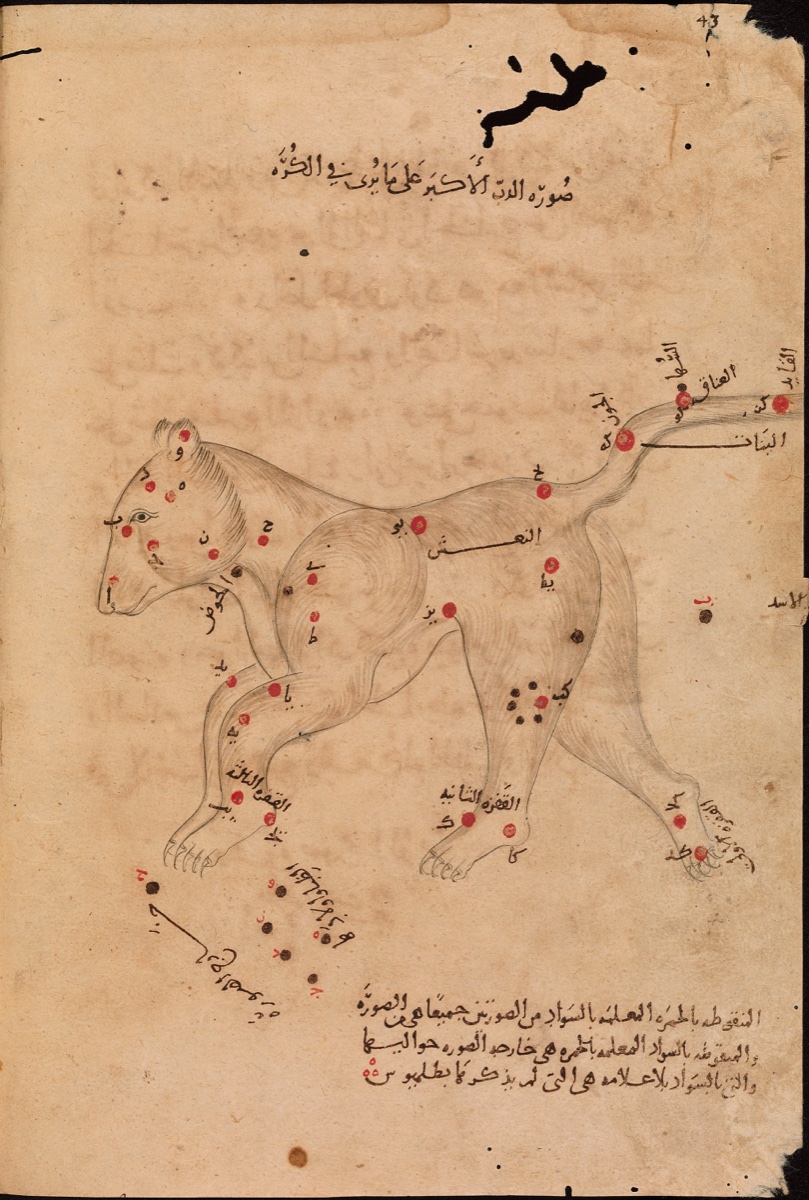
The clearest trace of Islamic astronomy is in the names of the stars. Aldebaran, Altair, Deneb, Betelgeuse, Rigel and Vega are all Arabic. So are technical words every astronomer uses: azimuth, nadir and zenith.
The scholar behind much of this was Abd al-Rahman al-Sufi (903 to 986). His Book of Fixed Stars, finished in 964, matched the Greek star catalogue to the constellations Arab tradition already knew, and corrected both. In it he described a faint smudge in the constellation Andromeda, a “little cloud,” which is the first known written record of the Andromeda galaxy, more than two million light years away and mapped with the naked eye.
Astronomy and astrology in Islam
People often ask whether Islam permits reading the stars. The answer turns on a distinction. Islam encourages studying the heavens as signs of God's creation, which is astronomy, and the Qur'an repeatedly invites reflection on the sun, the moon and the stars. What many Muslim scholars condemned was judicial astrology: using the stars to predict the future or claiming they control human fate. In Islam, the future and all power belong to God alone, so fortune-telling by the stars was seen as overstepping.
In practice, the line was not always sharp, and some court astronomers were pressed into casting horoscopes for rulers, over the objections of the scholars. But the science that lasted, and that changed the world, was the observation and mathematics, not the fortune-telling.
What it left behind
The legacy is overhead every night. The star names endure, and so do the methods. The models built at Maragha and by later astronomers such as Ibn al-Shatir reached Europe and fed into the revolution led by Copernicus. The astrolabe trained generations of European astronomers. Islamic astronomy was not a footnote to the story of how humans came to understand the sky. For centuries, it was the story.
Learn Islamic history with Archives
Archives turns 1,400 years of Islamic history, including the astronomers on this page, into one short, true story a day. Sourced, built to stick, and made for people who want to understand their history without wading through textbooks.


Who writes these guides
History is only worth reading if it’s true, so here is who writes it.

“Every time someone says the word Aldebaran or azimuth, they are speaking a little Arabic without knowing it. I love showing people how much of the night sky was mapped by Muslim hands.”
Islamic astronomy: frequently asked questions
Why did Muslims study the stars?
Faith gave astronomy a daily purpose: finding the qibla (the direction of Mecca) for prayer, fixing the prayer times by the sun, and sighting the new crescent moon that begins each month, including Ramadan. These needs drove centuries of careful observation.
What are Arabic star names?
Many familiar stars carry Arabic names from medieval Muslim astronomers, including Aldebaran, Altair, Deneb, Betelgeuse, Rigel and Vega. Words like azimuth, nadir and zenith are Arabic too.
Who was al-Sufi?
Abd al-Rahman al-Sufi (903 to 986), a Persian astronomer whose Book of Fixed Stars (964) gave the first known description of the Andromeda galaxy, which he called a “little cloud.”
Is astrology allowed in Islam?
Islam encourages astronomy, the study of the heavens as signs of God's creation. Using the stars to predict the future or claim they control destiny, which is judicial astrology, was condemned by many scholars, because in Islam the future and all power belong to God alone.
Keep exploring
More of the story, on the web and in the app.